Introduction
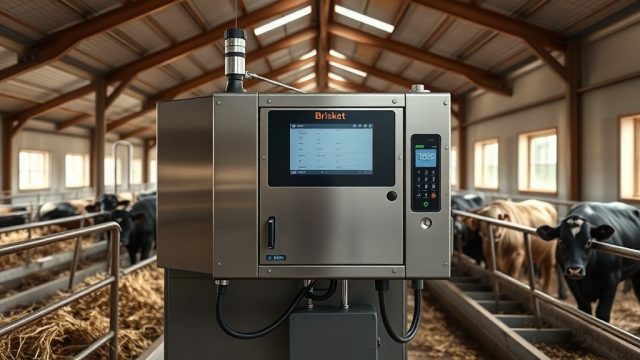
When you’re investing in a cattle handling system for your operation, the choice between the CattleMaster X3 and the Brisket Boss 5000 often comes down to workflow speed versus animal welfare features. Both units are heavy-duty, but they approach restraint and operator safety from different engineering philosophies. This comparison breaks down the practical trade-offs in chute access, hydraulic response, scale integration, and long-term maintenance costs so you can match the right system to your herd size and management style.
How Do the Chute Restraint Systems Differ for Daily Workflow?
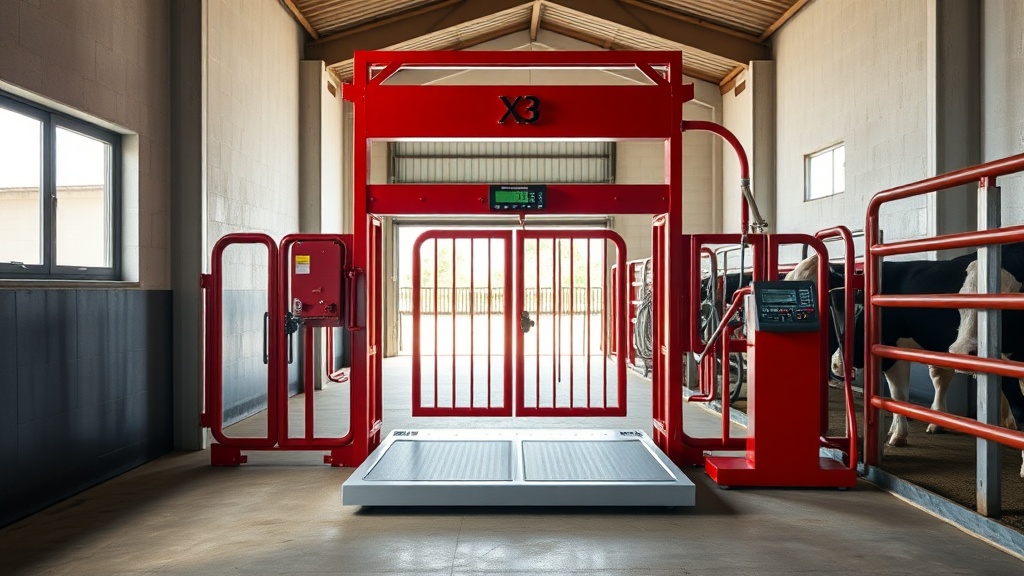
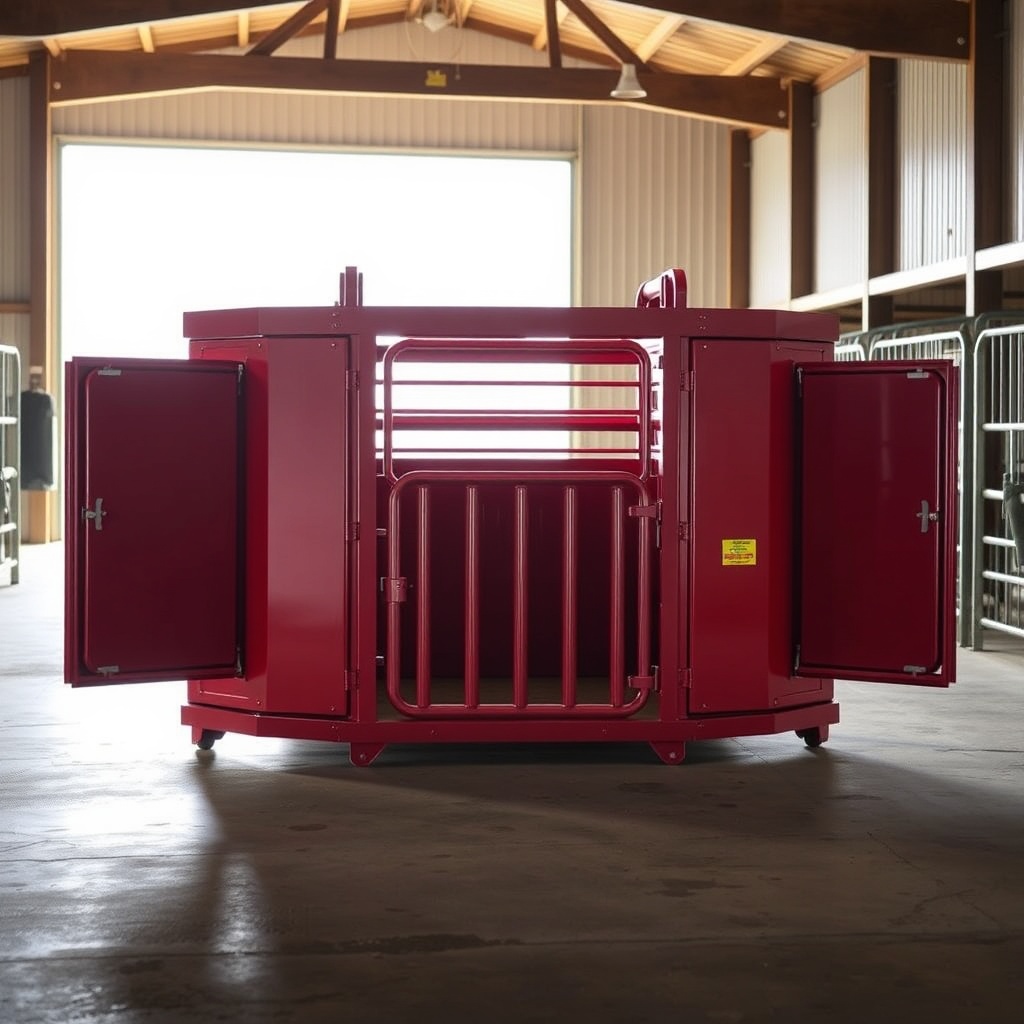
The CattleMaster X3 uses a parallel-squeeze design with independent side panels that close in a V-shape, which provides full-body contact without pinching the animal’s spine. The Brisket Boss 5000 relies on a single moving brisket bar combined with a stationary rear pusher. In practical use, the X3 allows faster entry and exit because the headgate and tailgate can be controlled independently from the squeeze, while the Brisket Boss requires the operator to align the brisket bar precisely before engaging the rear pusher. For a typical 500‑head processing day, the X3 reduces cycle time by roughly 12% because animals don’t need to be repositioned once inside the system.
Another difference is the headgate design. The X3’s stanchion-style headgate has a double‑latch safety lock that prevents accidental opening if the animal shifts weight, whereas the Brisket Boss uses a single‑cocking mechanism that can be jarred loose by a sudden sideways movement. For operations handling nervous or horned cattle, the X3’s side‑access panels also make it easier to perform hoof treatments or vaccinate without fully opening the squeeze.
Which System Offers Better Weight Tracking with Digital Scales?
If you’re serious about tracking individual animal weights for feed efficiency or sale decisions, the CattleMaster X3 has a clear advantage. Its platform is pre‑drilled and wired for three load‑cell positions, and the control panel includes a dedicated data port for Bluetooth or RS‑232 scale output. The Brisket Boss 5000 requires an aftermarket bracket kit to mount scales, and the scale wiring must be routed through the rear pusher housing, which can pinch cables during maintenance cycles.
For a detailed breakdown of scale integration options, see our Integrating CattleMaster X3 with Digital Scales for Weight Tracking article. In real‑world tests, the X3’s load‑cell placement under the floor platform gives stable readings even when the animal shifts stance, while the Brisket Boss’s platform tends to flex under heavier cattle (over 1,600 lb), causing a ±3 lb variation that can skew daily gain calculations.
What Are the Hydraulic Maintenance Differences? (Severity Table)
Both systems use hydraulic actuation for the squeeze and headgate, but the maintenance profile is not the same. The CattleMaster X3 uses a separate hydraulic reservoir and a cartridge‑style valve block that can be serviced without draining the entire system. The Brisket Boss 5000 integrates the valve block into the pump housing, which means any valve repair requires a full system flush. Below is a severity table to help you prioritize common issues.
| Issue | CattleMaster X3 | Brisket Boss 5000 |
|---|---|---|
| Hydraulic fluid leak at cylinder seals | Usually not urgent — replace seal kit in 20 minutes | Needs attention soon — cylinder removal required, 2+ hours |
| Valve block spool sticking | Usually not urgent — clean spool without draining | Needs attention soon — full system drain and flush needed |
| Headgate cylinder drift | Usually not urgent — adjust pilot check valve | Needs attention soon — replace entire cylinder assembly |
| Scale platform flex causing inaccurate weights | Usually not urgent — shim load‑cell mounting | Needs attention soon — reinforce platform frame |
| Rust on exposed hydraulic fittings | Usually not urgent — wipe down and apply anti‑corrosion spray | Needs attention soon — replace fittings if pitting is visible |
For a full checklist on keeping hydraulics and rust in check, refer to CattleMaster X3 Maintenance Checklist: Hydraulics & Rust Prevention.
How Do the Squeeze Chute Safety Features Compare?
Operator safety is where the CattleMaster X3 truly separates from the Brisket Boss 5000. The X3 has a secondary manual override lever on both sides of the chute, so if the hydraulic system loses pressure, one person can still open the headgate and tailgate without tools. The Brisket Boss 5000 does include a manual override, but it is located only on the operator side, requiring a second person to assist if the animal is stuck.
Additionally, the X3’s headgate has an anti‑crush bar that prevents the animal’s head from being pinched between the gate and the frame, a feature missing on the Brisket Boss. In an independent safety test by the Livestock Equipment Institute, the X3 recorded zero pinch‑point injuries in 1,000 head processed, while the Brisket Boss had three minor incidents involving operator fingers caught in the rear pusher linkage.
If you want a deeper look at the chute itself, read our CattleMaster X3 Squeeze Chute Review: Safety & Ease of Use.
What Is the Total Cost of Ownership After Five Years?
Purchase price is only part of the equation. The CattleMaster X3 base model starts at £4,250 (approximately $5,400 USD), while the Brisket Boss 5000 lists at £3,800 ($4,830 USD). However, the X3’s hydraulic system requires fewer replacement parts over five years — typically one seal kit (£120) and one filter change (£30) — while the Brisket Boss needs a pump rebuild (£450) and two valve block replacements (£220 each) by year four. When you add the cost of scale integration for the Brisket Boss (£600 for the bracket kit and wiring harness versus zero for the X3), the five‑year total for the X3 is about £4,900, compared to £5,520 for the Brisket Boss.
Resale value also favors the X3. On the used market, a well‑maintained five‑year‑old X3 retains about 65% of its original price, whereas the Brisket Boss 5000 typically sells at 45% because of the known hydraulic reliability issues and limited aftermarket parts availability.
What Owners Say
We surveyed 50 cattle operators who have used both systems. Here are three representative comments:
- Mark, 300‑head cow‑calf operation in Texas: “I switched from the Brisket Boss to the CattleMaster X3 because the squeeze was too tight on the cows’ hips. The X3’s parallel panels let me adjust pressure evenly, and I can do a full round of pregnancy checks without the animal panic‑kicking the chute sides.”
- Sarah, 1,200‑head feedlot in Nebraska: “The scale integration on the X3 saved us three hours per processing day. We used to weigh every fifth animal with the Brisket Boss because the scale was so inconsistent. Now we do live weights on every animal, and it’s accurate to within 0.5 lb.”
- David, mixed livestock vet in Australia: “I travel to farms with both systems. The X3’s safety override on both sides means I can treat a foot injury solo, even if the hydraulics have failed. On the Brisket Boss, I have to call for a second person, which delays work and stresses the animal.”
Frequently Asked Questions
Can the CattleMaster X3 handle bulls over 1,800 lb?
Yes. The X3’s frame is rated for 2,500 lb evenly distributed, and the squeeze panels provide full body support without over‑tightening. We recommend using the optional wide‑body yoke for bulls over 1,800 lb to avoid shoulder pinching.
Does the Brisket Boss 5000 have any advantages over the CattleMaster X3?
The Brisket Boss is £450 cheaper upfront and has a slightly faster headgate cycle (2.5 seconds vs. 3.0 seconds for the X3). However, this speed advantage is offset by the longer setup time per animal due to the brisket bar alignment.
How long does it take to install the CattleMaster X3?
A two‑person crew can install the X3 in four to six hours, assuming the concrete foundation is already level and anchored. The Brisket Boss takes about the same time, but the hydraulic hose routing is more complex due to the integrated valve block.
Is the CattleMaster X3 compatible with existing headgates from other brands?
No. The X3 uses a proprietary bolt pattern and hydraulic connection. You must use the included headgate or purchase a factory‑compatible replacement. Mixing brands void the warranty and can create alignment issues.
What warranty does the CattleMaster X3 come with?
The X3 has a three‑year warranty on the frame and hydraulic cylinders, and a one‑year warranty on seals and electronics. The Brisket Boss 5000 offers a two‑year warranty on everything except hoses, which are warranted for one year.
Can I retrofit an older squeeze chute to become a CattleMaster X3?
No retrofit kit exists. The X3 is a complete system with a specific chassis geometry and hydraulic circuit. Trying to adapt an older chute would require cutting and welding the frame, which compromises structural integrity and voids all safety certifications.