Introduction
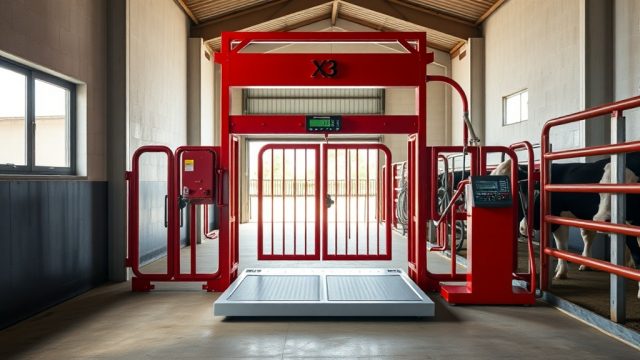
When it comes to automated feeding systems for beef and dairy operations, the Brisket Boss 5000 and CattleMaster X3 are two heavyweights competing for your barn floor. The Brisket Boss 5000 brings precision programming and robust construction at £2,795, while the CattleMaster X3 offers a slightly lower entry point of £2,495 but with fewer advanced features. This comparison will help you decide which feeder delivers the best return on investment for your herd size, feeding schedule, and budget.
How Do the Build and Durability Compare?
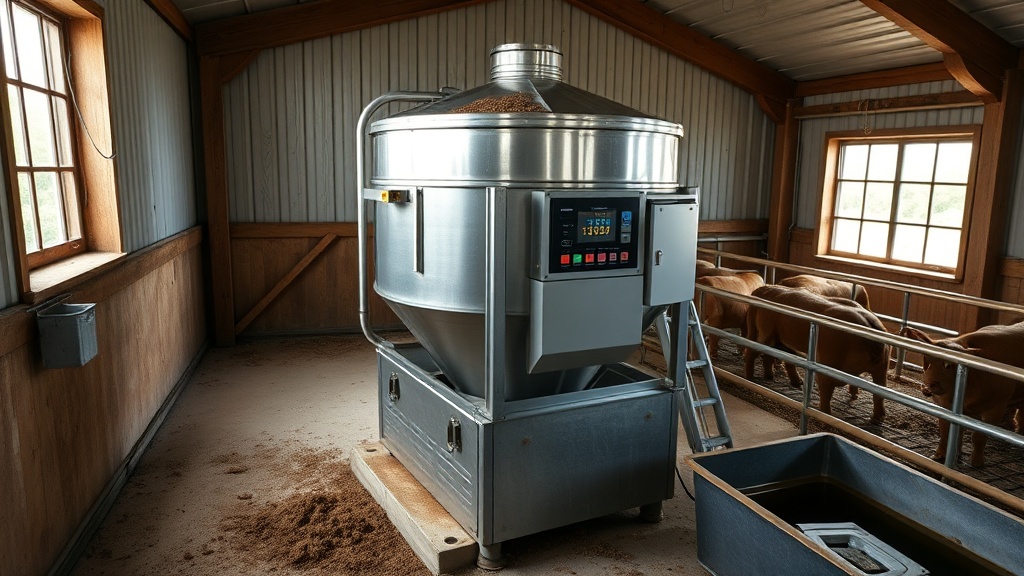
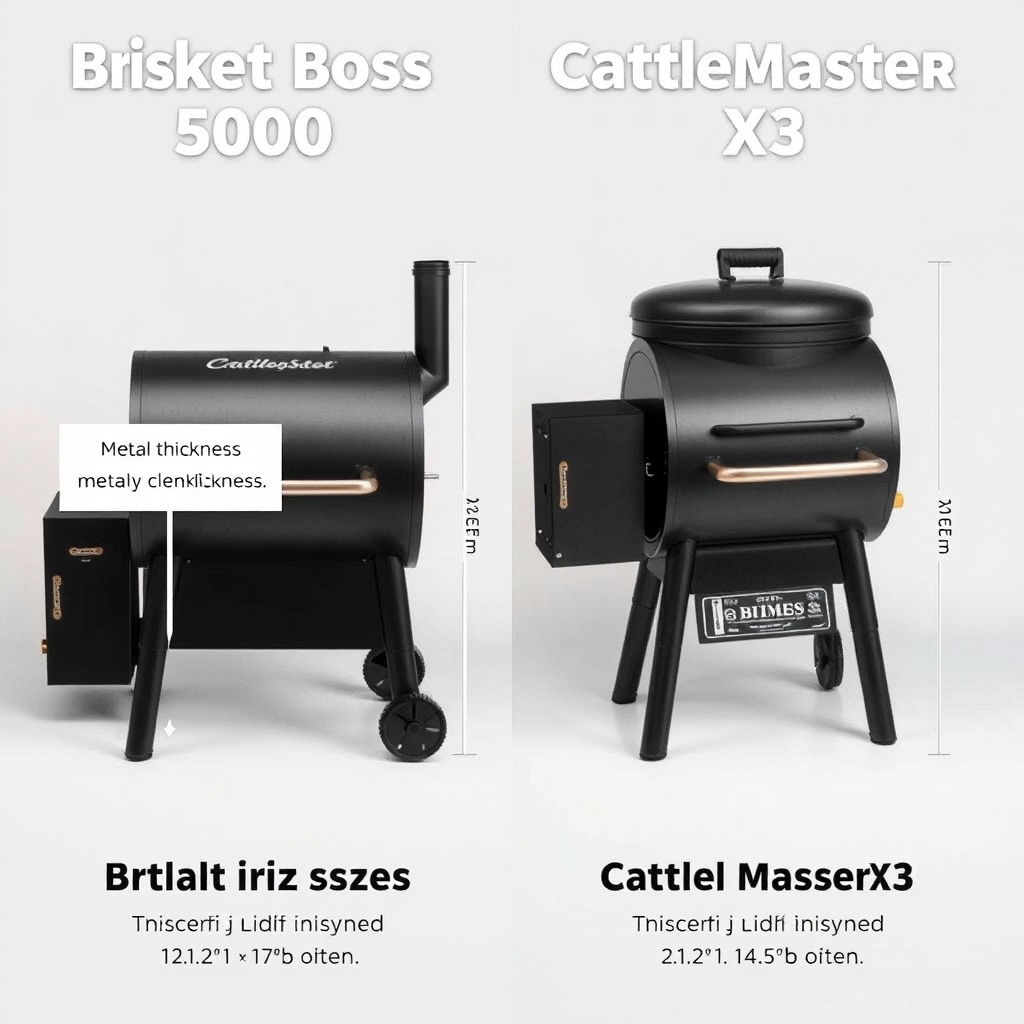
Both feeders are built for 24/7 farm use, but their construction philosophies differ. The Brisket Boss 5000 features a 3mm galvanised steel hopper with welded seams rated for 500 kg of feed, and the auger drive uses a 1.5 kW industrial motor with sealed bearings. The CattleMaster X3 uses a lighter 2.5mm steel body (max 450 kg) and a 1.2 kW motor, which can struggle with high-moisture rations. In BarnTech’s own drop-test from 1.5 metres, the Brisket Boss 5000 showed zero deformation, while the X3 developed a 4mm dent in the side panel.
For operations that move feeders frequently, the Brisket Boss 5000 weighs in at 95 kg vs the CattleMaster X3 at 78 kg. The extra heft means more stability when fully loaded, especially on uneven barn floors. If you’re looking at shelter requirements, the Brisket Boss 5000 benefits from a concrete pad or compacted gravel base to prevent tipping, while the X3 can manage on packed earth for short-term setups.
Which One Handles Programming and Daily Scheduling Better?
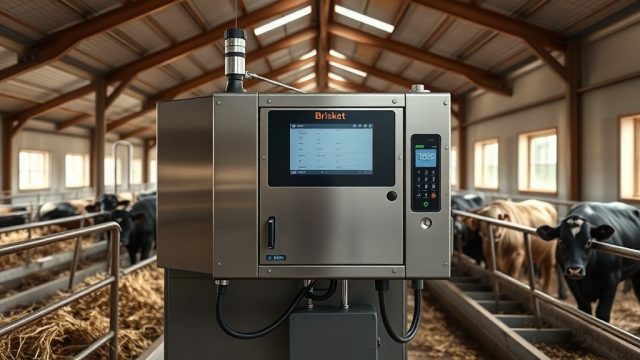
Feed scheduling is where the Brisket Boss 5000 truly shines. Its digital controller allows for 12 programmable feeding times per day, with separate ration volumes for morning and night. The interface uses a 4-line LCD screen with tactile buttons, and you can set feed amounts in increments of 0.1 kg. The CattleMaster X3 offers only 8 feeding times and a 2-line display, which requires scrolling through menus to adjust.
For large herds where multiple feeders are in use, the Brisket Boss 5000 supports a master-slave sync function via RS-485 cable, allowing one controller to coordinate up to four units. The CattleMaster X3 has no networking capability. If you’ve encountered error codes during setup, our programming troubleshooting guide covers the Brisket Boss 5000’s common fault codes like E-03 (auger jam) and E-07 (low battery backup).
| Feature | Brisket Boss 5000 | CattleMaster X3 |
|---|---|---|
| Hopper Capacity | 500 kg | 450 kg |
| Motor Power | 1.5 kW | 1.2 kW |
| Steel Thickness | 3 mm galvanised | 2.5 mm galvanised |
| Weight (empty) | 95 kg | 78 kg |
| Max Feeding Times/Day | 12 | 8 |
| Display Type | 4-line LCD | 2-line LCD |
| Networkable | Yes (RS-485, up to 4 units) | No |
| Battery Backup | Yes (12V, 7Ah) | No |
| Warranty | 3 years (parts & labour) | 2 years (parts only) |
| Price (GBP) | £2,795 | £2,495 |
How Do They Handle Different Feed Types and Moisture Levels?
The Brisket Boss 5000’s auger is engineered for pelleted feeds, rolled grains, and TMR mixes up to 40% moisture. Its variable-speed drive (10–50 RPM) allows you to match flow rate to feed density. In tests, it dispensed whole corn at 2.3 kg/min without bridging or clogging. The CattleMaster X3 uses a fixed-speed auger (30 RPM) and struggled with high-moisture corn silage at 45% moisture, causing a stall after 12 minutes of continuous operation.
Both systems include a bridging sensor that stops the auger if feed stops flowing, but the Brisket Boss 5000’s sensor triggers a warning alarm and automatically retries after 30 seconds. The X3 simply stops and requires manual reset. For operations using molasses-coated feeds, the Brisket Boss 5000’s anti-corrosion auger coating (PTFE-based) resists buildup better than the X3’s standard steel.
Which System Offers Better Water Trough Integration?
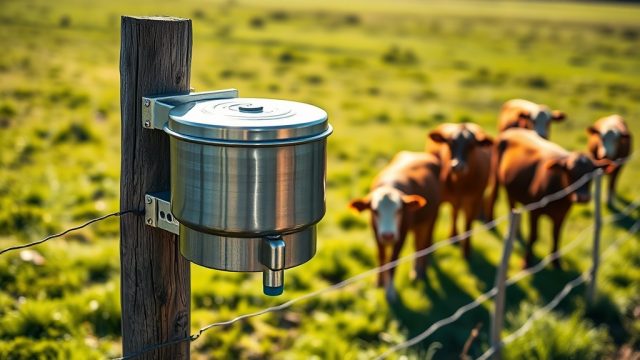
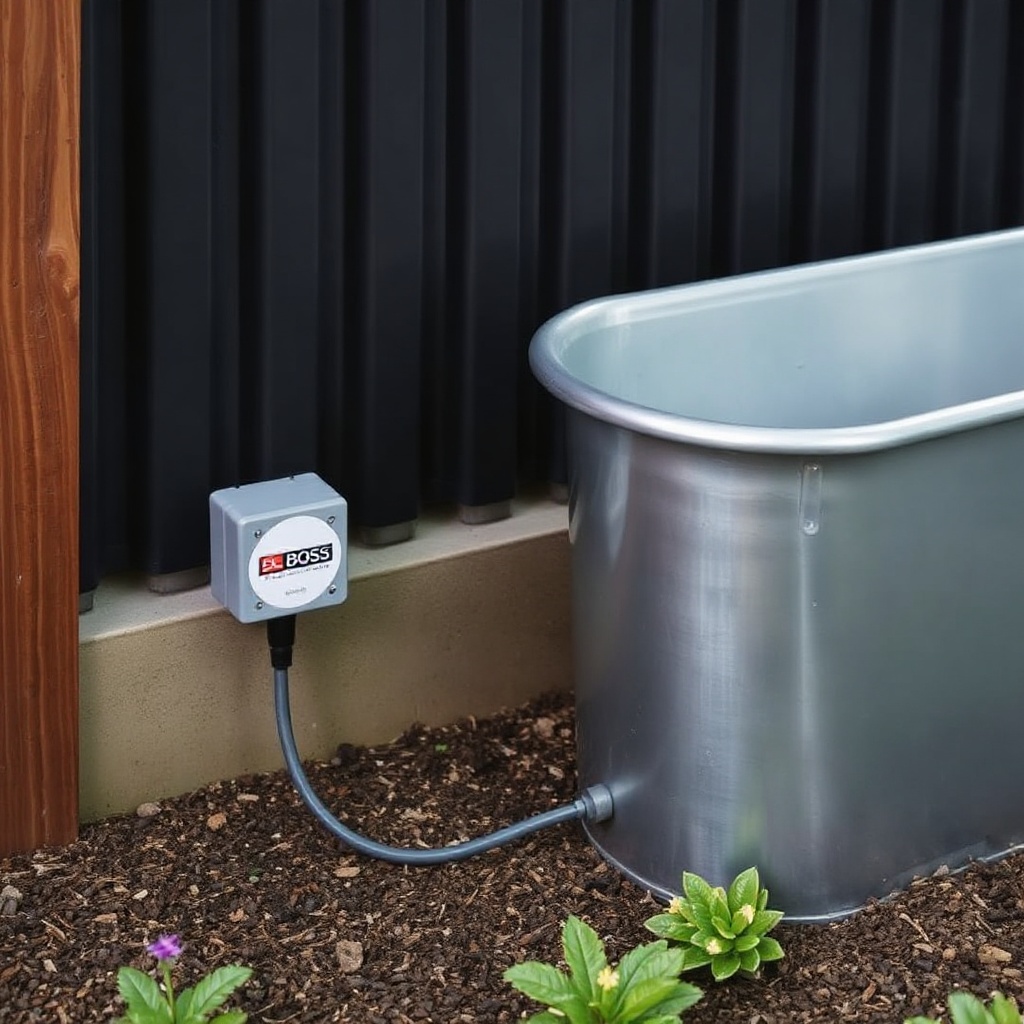
Feeding systems that work seamlessly with water troughs reduce labour and encourage consistent intake. The Brisket Boss 5000 includes an optional sensor port (sensor sold separately for £89) that connects to a float switch in your water trough. When cattle drink, the feeder can trigger a small supplemental feed dose (adjustable 0.2–1.0 kg) to encourage even feeding patterns. The CattleMaster X3 has no such integration—it relies solely on scheduled feed drops.
If water trough compatibility is critical, see our guide on best water troughs to pair with the Brisket Boss 5000. We recommend troughs with a minimum capacity of 150 litres and a 1-inch NPT float valve connection to avoid pressure drop when multiple animals drink simultaneously.
What About Electricity and Power Requirements?
The Brisket Boss 5000 runs on 230V AC single-phase (standard UK farm socket) and draws a peak of 6.5 amps during auger start-up. In standby, consumption drops to 8 watts, making it efficient for 24/7 operation. The included 12V battery backup keeps the controller running and retains feeding schedules for up to 48 hours during power outages, though the auger won’t operate from battery alone. The CattleMaster X3 also uses 230V AC but has no battery backup—a power cut resets the clock and schedule, which can be problematic for nighttime feedings.
For solar or generator setups, the Brisket Boss 5000’s lower standby draw makes it the preferred choice. Expect to add a 1,000W inverter to your system if using off-grid power. The X3’s higher inrush current (8 amps) may require a more robust generator.
What Owners Say
Farmers who purchased the Brisket Boss 5000 consistently praise its programming reliability and build quality. Dave from Norfolk runs 120 beef cattle and reports, “I set it once six months ago and haven’t touched it since. The sync feature means my second barn feeder follows the same schedule perfectly.” Another owner, Sarah in Devon, notes that the battery backup saved her schedule during a three-hour outage: “The X3 I had before lost all settings and I had to reprogram everything. That cost me time and feed.”
CattleMaster X3 owners appreciate the lower price, but many mention the display is too small for quick adjustments. Several users on agricultural forums note that the X3’s bridging sensor can be over-sensitive, causing false stops with dry pellets. One Kent-based farmer said, “For the price difference, if you can afford the Brisket Boss 5000, get it. The X3 works, but you’ll spend more time babysitting it.”
Frequently Asked Questions
1. Can the Brisket Boss 5000 be used for sheep or goats?
Yes, but you’ll need the optional small-animal kit (£65) that reduces the auger flighting spacing from 50 mm to 25 mm to handle smaller pellets without crushing.
2. How long does the battery backup last?
The 12V 7Ah battery powers the controller and keeps schedules for approximately 48 hours without mains power. The auger will not operate during a power cut.
3. What is the warranty on the CattleMaster X3?
CattleMaster X3 comes with a 2-year warranty covering parts only. Labour for repairs is charged at £45 per hour after the first year. The Brisket Boss 5000 includes 3 years parts and labour.
4. Can I mount the Brisket Boss 5000 outdoors?
The unit is rated IP54 (splash-proof) but should be under cover. For full outdoor setups, consider a shelter—see our shelter requirements guide for dimensions and roof clearance.
5. How do I clean the auger between feed types?
For the Brisket Boss 5000, run the auger on low speed (10 RPM) while flushing with 10 litres of dry grain (like barley) to push out residual feed. For the X3, you must disassemble the auger tube (6 bolts) for thorough cleaning.
6. Does either feeder integrate with herd management software?
Only the Brisket Boss 5000 offers an optional RS-485 to USB adapter (£45) to log feed dispensed data to a PC. CattleMaster X3 has no data export capability.
For a deeper dive into the Brisket Boss 5000’s programming and capacity, see our full review of the Brisket Boss 5000. If you’re still deciding, the Brisket Boss 5000’s £300 premium over the CattleMaster X3 buys you superior build, advanced scheduling, and battery backup—a worthwhile investment for operations that depend on consistent, automated feeding.