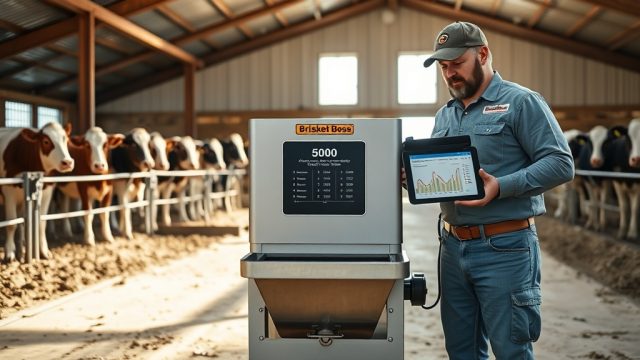
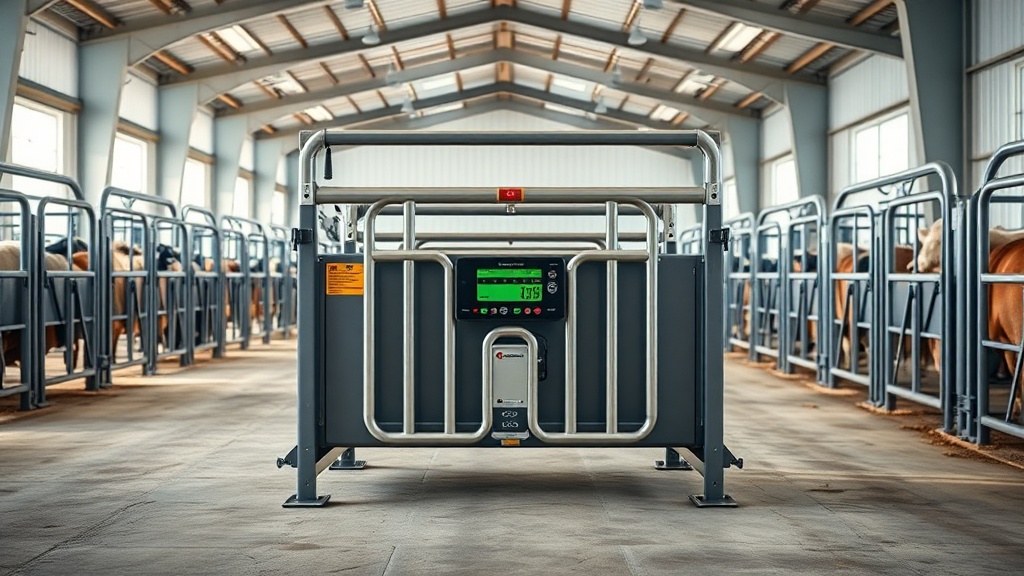
Why Weight Tracking Matters for Your CattleMaster X3 Setup
When managing a commercial beef or dairy herd, knowing each animal’s weight isn’t just a number—it’s a direct indicator of feed efficiency, health status, and market readiness. The CattleMaster X3 hydraulic squeeze chute already stands out for its smooth operation and safety features, but integrating it with a compatible digital scale system turns routine handling into a data-rich workflow. This article walks you through the practical steps, equipment options, and common pitfalls when pairing digital scales with the CattleMaster X3 so you can track weight trends without slowing down chute throughput.
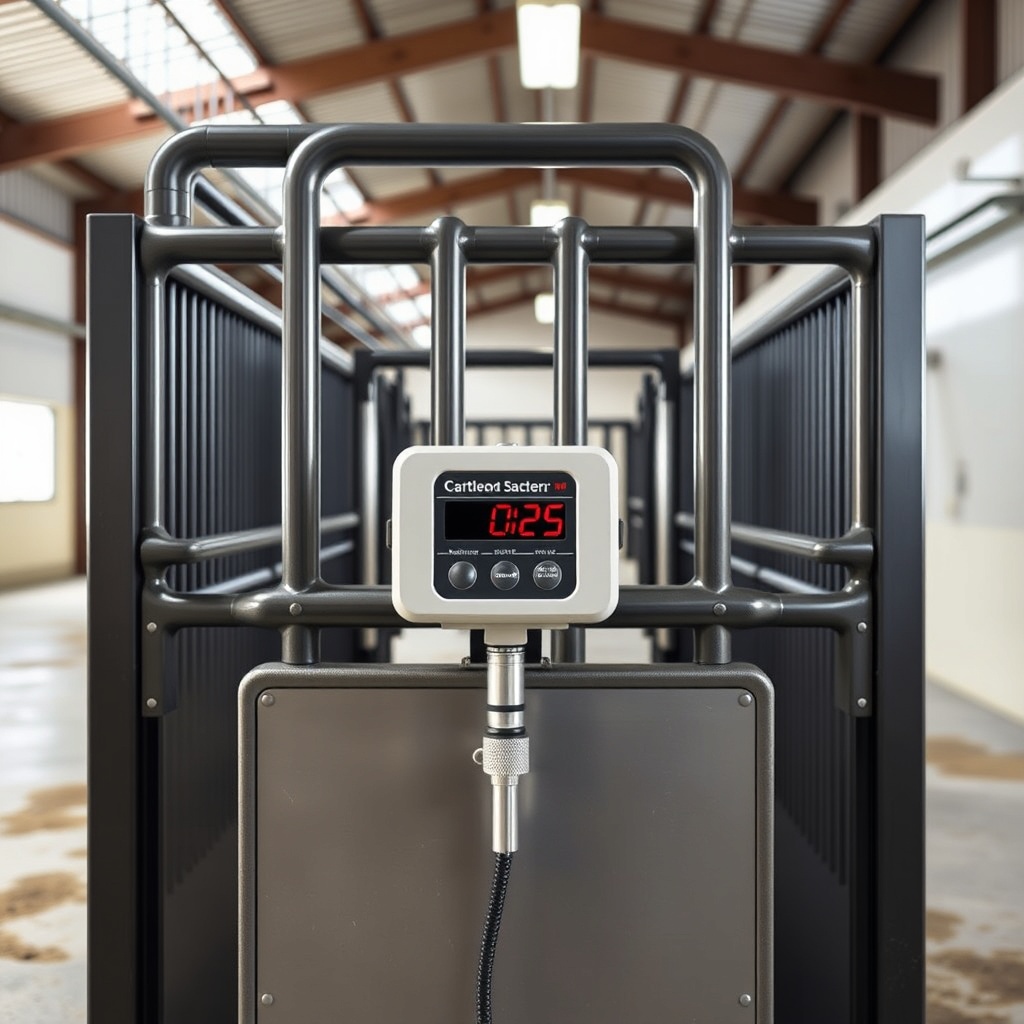
Which Digital Scale Systems Work Best with the CattleMaster X3?
The CattleMaster X3 is built with a standard 48-inch-wide, 96-inch-long platform that can accept most aftermarket weighing kits. The most reliable setups use a low-profile load cell array—usually four 1,000 kg (2,200 lb) shear-beam load cells bolted directly to the chute frame via the factory-machined mounting pads. Brand options include Tru-Test XR3000, Digi-Star EZ3500, and Gallagher TW Series indicators. For permanent integration, choose a system with at least 5,000-count resolution and IP65-rated connectors to handle dust and washdown.
Wireless Bluetooth-enabled indicators are popular because they let the operator read weights from a smartphone or tablet mounted outside the chute’s splash zone. However, hardwired models tend to be more reliable in cold weather when Bluetooth range can drop to 6–10 metres.
How Do You Calibrate the Scales for Accurate Weight Tracking?
Calibration isn’t a one-time event. You should check accuracy every 30 days or after any hydraulic repair or replacement of load cells. Start by zeroing the indicator with no animal on the platform. Then place certified test weights—typically 500 kg (1,100 lb) total, distributed evenly across the platform—and adjust the indicator’s calibration factor until the reading matches exactly. Most indicators allow a two-point calibration (zero and span). For the CattleMaster X3, the recommended span is 50 kg to 1,000 kg. If you only test with one small weight, you risk a non-linear error curve.
Keep a calibration log sheet in a waterproof sleeve clipped to the chute’s side. Note the date, test weight used, indicator reading before and after adjustment, and who performed the calibration. This is also a requirement for any herd health program that uses weight-for-age standards.
| Calibration Check Frequency | Action Required |
|---|---|
| Weekly with small herd (< 50 head) | Zero check only – walk-through with no animal |
| Monthly with moderate herd (50–200 head) | Full two-point calibration with 500 kg test weight |
| After any hydraulic service or load cell replacement | Complete recalibration with 200 kg and 800 kg test weights |
| When weight variation exceeds ±1% of expected ADG | Re-run calibration and check for mechanical binding |
What Data Fields Should You Record During Each Weighing?
Weight alone isn’t enough for meaningful health monitoring. For each animal processed through the CattleMaster X3, record at least: animal ID (EID tag or visual tag number), date and time, weight in kilograms, and a health score (1–5 scale where 1 = poor, 5 = excellent). The digital indicator can output these fields via RS-232 or Bluetooth to herd management software like CattleMax, HerdX, or Performance Beef. If you’re using a mobile app, set up custom fields for body condition score (BCS 1–9) and lameness score (0–4). The CattleMaster X3’s integrated head gate makes it easy to inspect ears, eyes, and feet while the animal is stationary—use those 10–15 seconds to add observations.
One tip: do not rely on a single static weight reading. Weigh every animal at least twice during the session—once on entry and once on exit—and average the two. This cancels out the animal’s natural weight shift caused by tension and urination.
How Does the CattleMaster X3’s Hydraulic System Interfere with Scale Readings?
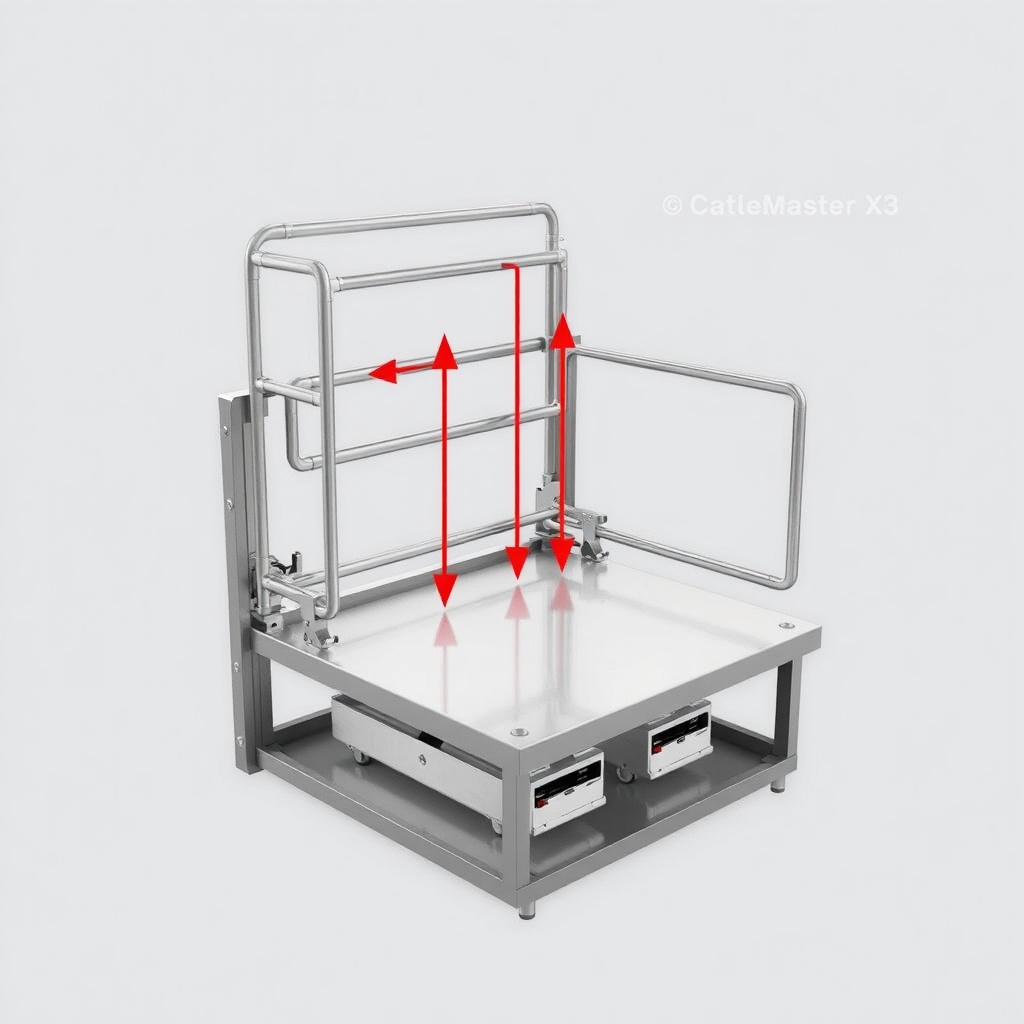
Hydraulic chutes present a unique challenge for digital scales: the weight of the hydraulic cylinder and hoses can shift as the side panels close, introducing a systematic error of 5–15 kg depending on the animal size and how snugly the animal is held. To mitigate this, the CattleMaster X3 uses a floating floor design where the weighing platform is mechanically isolated from the hydraulic frame. Even so, we recommend a “tare on clamp” procedure: with the chute empty, close the side panels fully, then zero the scale. This subtracts any static load from the hydraulic mechanism. For the most precise tracking, only record the weight when the animal is fully contained and the sides are closed—typically within 2–3 seconds of clamp.
Check your indicator’s firmware for a “filter” setting. A moderate filter (level 2 or 3 on most models) smooths out vibration from the hydraulics without introducing a lag that slows throughput.
Can You Retrofit an Older CattleMaster X3 with Digital Scales?
Yes. Units manufactured after 2018 have the factory mounting holes for a bolt-on load cell kit. For older X3 models (2015–2018), you may need a universal weighing platform retrofit kit that includes a new floor plate and load cell mounting brackets. The total cost for a complete retrofit kit (load cells, indicator, cable, and mounting hardware) runs from £1,200 to £2,400 (approximately $1,500 to $3,000 USD), depending on the indicator brand and whether you choose a wired or wireless setup. Installation takes a competent farm mechanic about 3–4 hours, including running cables and setting calibration.
Avoid cheap universal kits that promise to work with “any chute.” The CattleMaster X3’s frame geometry requires a specific bolt pattern and load cell height. Using generic brackets can cause binding under heavy animals, damaging both scales and chute.
What Owners Say
Tom R., a beef producer in Nebraska, runs 400 cows through his CattleMaster X3 every fall: “We added a Tru-Test XR3000 last year. The biggest change is that we now catch poor doers by week 6 instead of month 4. The Bluetooth to my iPad means I never have to dig through a wet notebook.”
Sarah L., a dairy farmer in Devon, UK, commented: “I was skeptical about hydraulics messing up the weight readings. But once we set the tare-on-clamp procedure, the repeatability is within 2 kg on the same animal back-to-back. That’s good enough for dry-off weight decisions.”
Mike D., who runs a custom feedlot in Alberta, adds: “One thing nobody tells you: you need a separate 12 V battery near the indicator if your chute is far from the barn. The cattleMaster X3’s hydraulic pump can cause voltage spikes that reset the scale if wired to the same supply. A £25 deep-cycle battery solved it.”
Frequently Asked Questions
Do I need a separate indicator for the CattleMaster X3, or can I use a smartphone app?
A dedicated indicator is recommended for reliability. While you can pair a Bluetooth load cell to a phone app, the app may not have the filtering needed to handle hydraulic vibration, and screen readability in sunlight is poor. Use a purpose-built indicator for daily weighing.
How often should I replace load cells on the CattleMaster X3?
Load cells typically last 5–8 years under normal use. Replace them if the calibration drifts more than ±2% after adjustment, or if the rubber boot is cracked and moisture has entered the cell. A slow creep in the zero reading is a telltale sign.
Can I use the same scales for both the squeeze chute and a separate weigh platform?
No—each system requires its own dedicated load cells and indicator. The CattleMaster X3’s platform is optimised for its frame, while a standalone weigh platform has a different mechanical linkage. Switching cables is not advised due to impedance mismatches.
What is the maximum weight capacity for CattleMaster X3 scales?
The factory-rated capacity is 1,500 kg (3,300 lb) for the weighing platform. For safety, never exceed this even if the load cells themselves are rated higher. Overloading can bend the platform frame and void the chute warranty.
How do I clean the scale platform without damaging load cells?
Use a pressure washer at low pressure (max 1,500 PSI) with a wide fan nozzle. Do not direct water into the load cell cable entry points. After washing, open the drain plugs at each corner of the platform to let out any standing water. Dry and apply a thin coating of food-grade grease to the load cell threads once a month.
Does integrating scales affect the CattleMaster X3’s warranty?
Installing a scale kit that uses the factory mounting holes and approved load cell brands does not void the chute warranty. Drilling new holes or welding brackets to the frame will void the structural warranty. Always check with your dealer before making modifications.
For more details on the chute itself, see our CattleMaster X3 Squeeze Chute Review: Safety & Ease of Use. If you are comparing handling systems, read CattleMaster X3 vs Brisket Boss 5000: Which Handling System Is Better?. And for keeping your gear in top shape, check the CattleMaster X3 Maintenance Checklist: Hydraulics & Rust Prevention.