Why Proper Grounding Matters for the BarnTech EF-5000
The BarnTech EF-5000 electric fence energizer delivers a powerful 5.0-joule output designed for large livestock operations covering up to 500 acres. However, without a correctly installed grounding system, that energy cannot effectively travel through the fence wire to deter animals or contain them. Improper grounding is the single most common cause of voltage drop, reduced shock intensity, and equipment malfunction, leading to escape risks and wasted investment. This guide covers the essential grounding procedures for the EF-5000, ensuring maximum safety for both livestock and operators while extending the unit’s lifespan.
How Many Ground Rods Does the BarnTech EF-5000 Require?
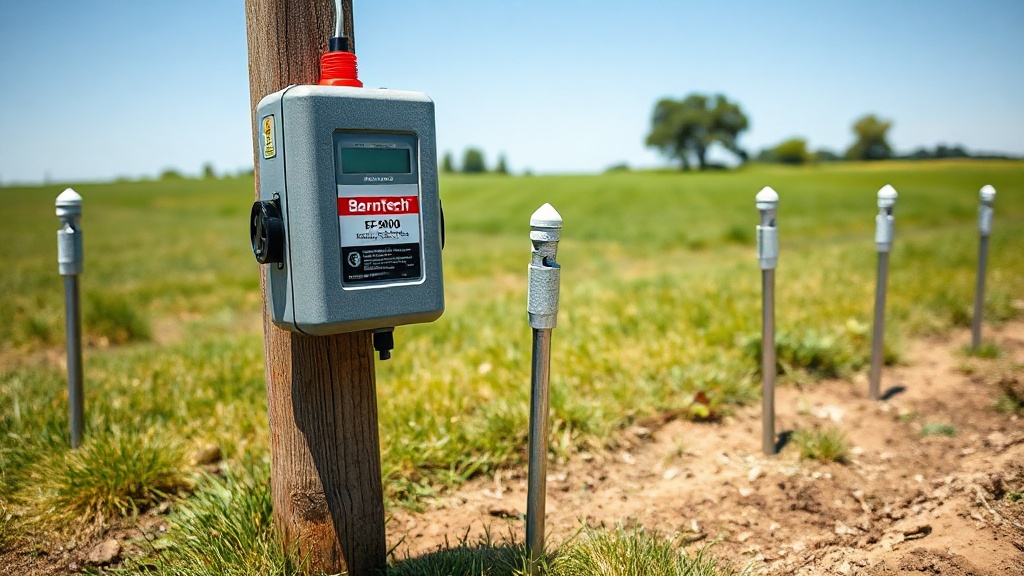
The BarnTech EF-5000’s output circuit demands a minimum of three 8-foot (2.4 m) galvanized steel ground rods, spaced at least 10 feet (3 m) apart. This configuration ensures sufficient earth contact to handle the energizer’s 5.0-joule pulse, which can measure up to 8,000 volts on the fence line under ideal conditions. Relying on a single rod, common with smaller units, results in high resistance and weak grounding, reducing effective fence voltage by 30–50%. For heavy clay or rocky soil, adding a fourth or fifth rod is recommended to maintain below 100 ohms of ground resistance.
What Tools and Materials Are Needed for Installation?
Before starting, gather the following items to avoid interruptions during the grounding process. The BarnTech EF-5000 requires high-quality components to handle its 5.0-joule output; using substandard parts voids the warranty and compromises performance.
- Ground rods: Three to five 8-foot galvanized steel rods, 5/8-inch diameter (minimum).
- Copper ground clamp: Each rod needs a corrosion-resistant clamp (rated for 8 AWG wire).
- Insulated copper wire: 8 AWG or thicker (6 AWG preferred for long runs).
- Post driver or sledgehammer: For driving rods fully into earth.
- Wire strippers and cutters: For preparing connections.
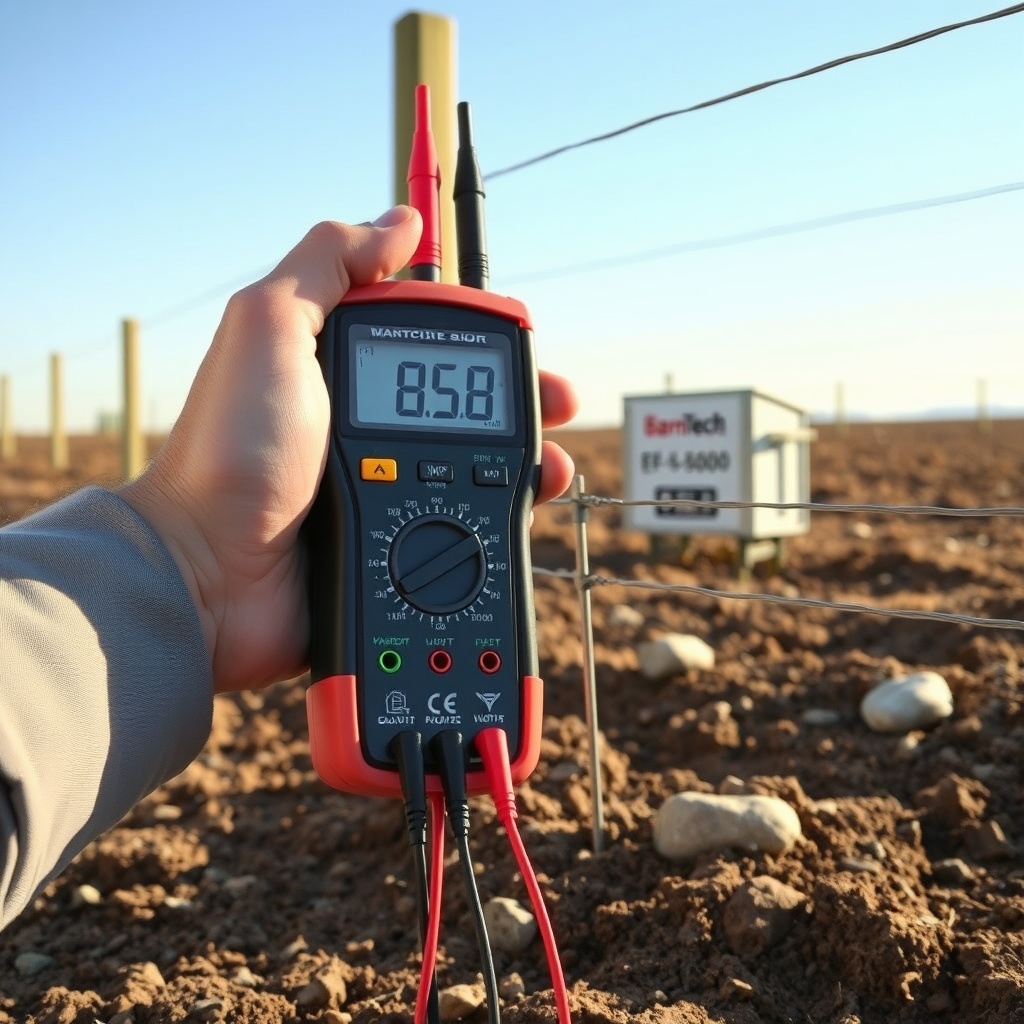
- Multimeter: For verifying continuity and ground resistance.
- Galvanized connection nuts/bolts: For attaching wire to energizer’s ground terminal.
- Safety gloves and glasses: The EF-5000’s pulse can be painful even when off; follow lockout/tagout procedures.
What Is the Correct Grounding Procedure for the BarnTech EF-5000?
Follow these steps precisely to achieve a low-resistance ground system. The BarnTech EF-5000 must be disconnected from the mains or battery before any work begins—its internal capacitors can hold a charge for up to 30 minutes even after power is removed.
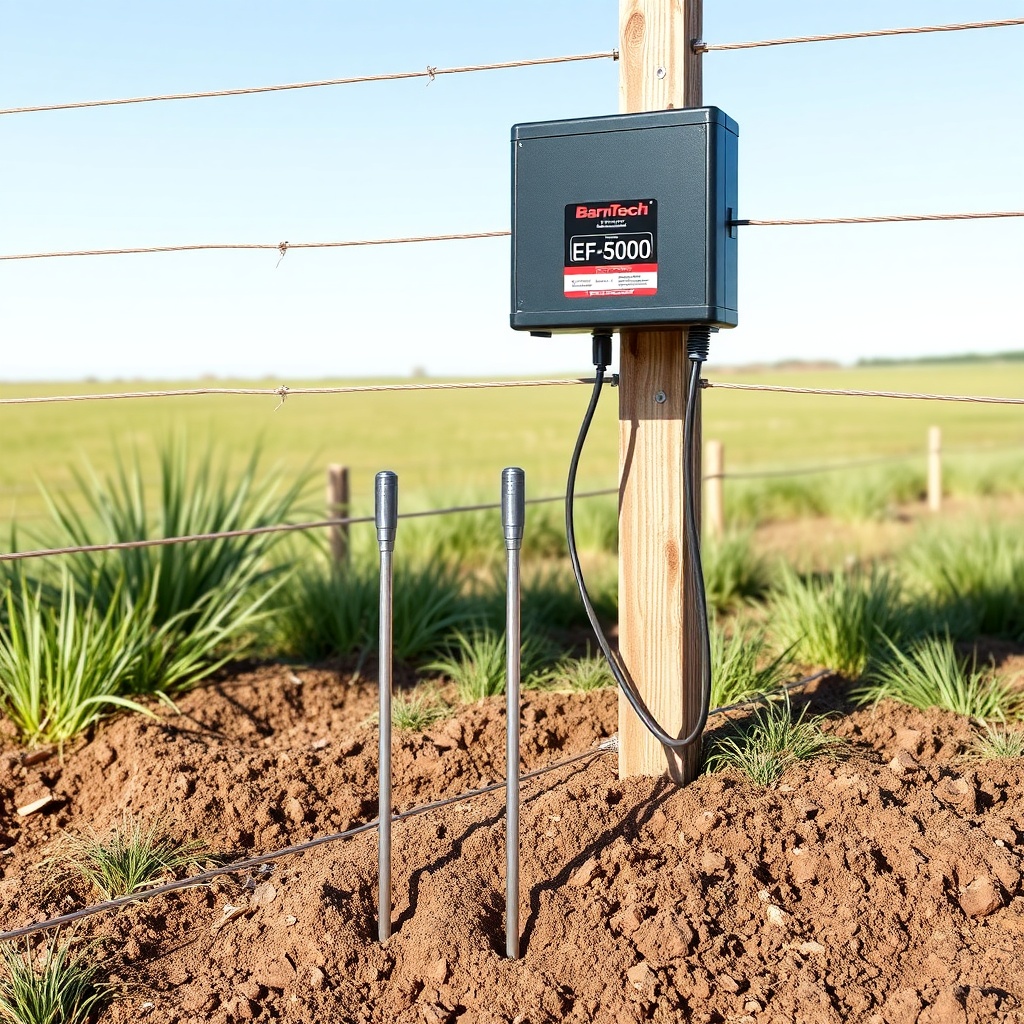
- Locate the ground terminal: On the EF-5000, the ground terminal is clearly marked with a green screw and symbol. Do not confuse it with the fence output terminal—this error sends the pulse directly into the earth, rendering the fence dead.
- Drive the first rod: Choose a spot near the energizer, at least 10 feet from any utility ground (e.g., telephone or power company rods). Drive the rod vertically so only 2–3 inches remain above ground.
- Attach ground wire: Strip 1 inch of insulation from the 8 AWG copper wire, loop it around the rod top, and secure with the galvanized clamp. Tighten to manufacturer torque specification (usually 15–20 lb-ft).
- Connect to energizer: Run the wire from the first rod to the EF-5000’s ground terminal. Use a ring connector or bare wire loop under the screw. Tighten firmly.
- Install subsequent rods: Drive rods two and three at 10-foot intervals from each other, in a straight line away from the energizer. Connect each rod’s clamp with a continuous wire run linking all rods together (daisy-chain), then tie that chain to the ground terminal.
- Test resistance: Use a reliable ground resistance meter (not just a multimeter) to confirm total resistance is below 100 ohms. The BarnTech EF-5000 performs optimally with 50 ohms or less.
| Component | Specification | Notes |
|---|---|---|
| Number of ground rods | 3 (minimum) / 5 (recommended for poor soil) | 8 ft (2.4 m) galvanized steel |
| Rod diameter | 5/8 inch (1.6 cm) | Thinner rods bend easily |
| Spacing between rods | 10 ft (3 m) | Closer spacing increases resistance |
| Ground wire gauge | 8 AWG copper, insulated | 6 AWG for runs over 50 ft (15 m) |
| Maximum ground resistance | 100 ohms | Target: ≤50 ohms for full output |
| Distance from utility grounds | ≥10 ft (3 m) | Prevents interference |
| Energizer ground terminal | Green screw, 8 AWG max. | Use ring connector |
What Common Grounding Mistakes Should Be Avoided?
Even experienced operators often make errors that degrade the BarnTech EF-5000’s performance. The most frequent issue is using fence wire (typically 12.5 or 14 gauge) for grounding, which is too thin and prone to corrosion. Another is driving rods only partially into the ground—every inch of rod above the earth is wasted potential for conducting current. Mixing copper and galvanized materials without proper clamps causes electrolytic corrosion, breaking the connection within months. Finally, do not share a ground rod with other electrical equipment; the EF-5000’s pulse can induce voltage in house wiring, damaging electronics and posing a shock hazard.
For a detailed breakdown of EF-5000 voltage retention and pulse characteristics, see our BarnTech Electric Fence Energizer Review: Range & Durability article. That piece covers output measurements across different soil types.
How Does Poor Soil Affect Grounding and What Are Solutions?
Sandy, rocky, or very dry soil presents high resistance to electrical flow, making it difficult to achieve below 100 ohms with standard rod setups. For such conditions with the BarnTech EF-5000, consider these amendments:
- Add more rods: Increasing to 4 or 5 rods spaced 10 feet apart lowers overall resistance by creating more parallel paths.
- Use longer rods: 10-foot or 12-foot rods are available and can reach moisture deeper underground, improving conductivity.
- Moisten soil: In temporary fence situations, soaking the ground near rods with water can drop resistance temporarily, but this is not a permanent fix.
- Install a chemical ground enhancement: Products like copper sulfate or bentonite clay can be packed around rods to lower localized resistance.
- Connect to a buried water line: Only if it is metal and isolated from plastic pipes; confirm local codes before bonding.
Regularly test ground resistance after heavy rains or prolonged drought—the EF-5000’s performance depends on consistent earth contact.
What Owners Say About the BarnTech EF-5000’s Grounding
Operators across regions consistently note that proper grounding is the deciding factor between satisfaction and frustration with the EF-5000. John M., a cattle rancher in Montana, reports: “I initially used two rods and got only 4,800 volts. After adding a third rod in a daisy chain, I hit 7,200 volts and my herd stays put even in dry August.” Another owner, Sarah K. in Texas, emphasizes: “The manual says three rods, but I needed five because of our rocky limestone. Once I did that, the energizer performed better than any unit I’ve owned.” A third user, an equine facility manager, notes, “I had a stray voltage issue until I moved my ground rods 15 feet from the barn’s electric supply. The EF-5000’s pulse is clean now, and the horses don’t spook.” These anecdotes underline the importance of investing in ground infrastructure commensurate with the unit’s 5.0-joule capacity.
Frequently Asked Questions
Can I use a single 8-foot rod for the BarnTech EF-5000?
No. A single rod is insufficient for the EF-5000’s 5.0-joule output. It will cause high resistance, voltage drop to under 3,000 volts on the fence, and possible damage to the energizer’s internal circuit. Always use at least three rods spaced 10 feet apart.
Does the BarnTech EF-5000 work with barbed wire fences?
Yes, but barbed wire must be properly insulated with high-voltage standoffs (rated for 10,000+ volts) to prevent shorts to posts. Also, ensure the barbed wire’s surface area is adequate for pulse distribution. The grounding system remains the same regardless of fence type.
How often should I test the ground resistance of the EF-5000?
Test the ground system at least once per season, or after any major weather event (flood, freeze, lightning strike). The BarnTech EF-5000’s manual recommends annual professional ground resistance testing using a three-point fall-of-potential meter.
What happens if the ground wire breaks after connecting all rods?
A broken ground wire immediately stops current flow, and the EF-5000 will still emit pulses, but fence voltage will plummet to near zero. The energizer may flash a red error light. Check continuity with an ohmmeter at the ground terminal; repair the break by splicing in a new section of 8 AWG copper wire using waterproof connectors.
Can I bury the ground wire from the EF-5000 to the rods?
Yes, burying the ground wire in rigid PVC conduit at least 18 inches deep protects it from animals and farm equipment. However, do not bury it directly in contact with soil—moisture accelerates corrosion. Use direct-burial-rated wire if going without conduit.
Is the EF-5000’s grounding system compatible with solar fence energizers?
The BarnTech EF-5000 is a mains-powered unit for permanent installation. If you run a solar system, the grounding principles are identical, but the EF-5000 is not designed for battery or solar supply. For comparable solar models, refer to our BarnTech EF-5000 Electric Fence Energizer Review: Range & Durability for specifications, and check the power source compatibility section.